BIKiNNOV and UBI Strengthen Links Between Research and the Soft Mobility Industry
The second stage of the “From Research to Market” Roadshow brought together the scientific and technological expertise of the University of Beira Interior and the innovation challenges facing the two-wheel industry, with a particular focus on Circular Cycling and Clean Technologies.
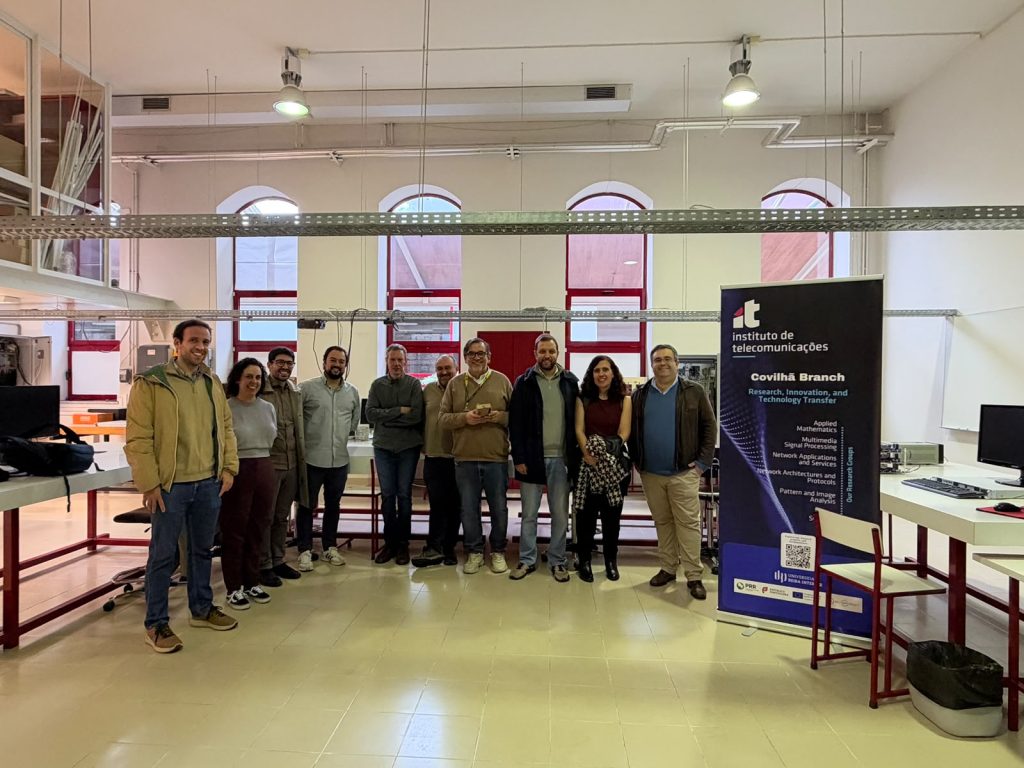
The University of Beira Interior (UBI) hosted the second stage of the BIKiNNOV Roadshow – “From Research to Market” on 13 November. Promoted by BIKiNNOV – Bike Value Innovation Center Association, the initiative aims to strengthen links between the scientific and technological community and the soft mobility industry, fostering knowledge transfer and identifying new opportunities for collaboration.
Dedicated to the theme “Circular Cycling and Clean Technologies”, this second session built on the work initiated at the Faculty of Engineering of the University of Porto (FEUP), providing a platform for knowledge sharing, dialogue and co-creation among researchers, representatives of scientific and technological organisations, and other stakeholders involved in innovation within the two-wheel sector.
The opening session featured Professor Mário Freire, President of the Faculty of Engineering at UBI, and Engineer César Coutinho, Chief Technology Officer of BIKiNNOV. This opening provided an opportunity to outline the objectives of the event and highlight the importance of bringing academia and industry closer together to enhance the value of scientific knowledge and develop technological solutions capable of addressing the current and future challenges of soft mobility.
The programme continued with a presentation of BIKiNNOV, delivered by César Coutinho, who introduced the Centre’s main areas of expertise, technological capabilities and fields of activity, as well as its role in promoting collaborative research, development and innovation projects.
This was followed by presentations showcasing UBI’s scientific and technological expertise through three research units: GeoBioTec – GeoBioSciences, GeoTechnologies and GeoEngineering; C-MAST – Centre for Mechanical and Aerospace Science and Technologies; and the Instituto de Telecomunicações (IT).
The presentations were delivered by Professor Bertha Santos, representing GeoBioTec, Professor Tânia Lima, representing C-MAST, and Professor Bruno Silva, representing the Instituto de Telecomunicações.
These presentations highlighted a range of research areas and laboratory capabilities with potential applications in the two-wheel industry, covering fields such as materials and structures, energy systems, telecommunications, mobility, territorial analysis and technologies related to environmental sustainability.
The collaborative component played a particularly important role during the co-creation workshop, in which participants were challenged to connect the scientific and technological expertise available at the university with the needs and challenges of the soft mobility industry. The workshop provided an opportunity for joint reflection and discussion, aimed at identifying areas of convergence and potential opportunities for collaboration.
More than simply showcasing expertise, the workshop sought to encourage interaction between different fields of knowledge, fostering the development of ideas and approaches that could contribute to more sustainable, efficient and innovative solutions for the two-wheel sector.
During the afternoon, the programme included technical visits to UBI’s laboratories and research facilities, allowing participants to gain first-hand insight into the resources and capabilities available at the institution.
The visits included the Power Systems Laboratory, associated with the Instituto de Telecomunicações; the Materials and Structures Laboratory, part of C-MAST; and, within GeoBioTec, the Territorial and Transport Analysis and Modelling Laboratory, the Geomatics Laboratory and the Environmental Sanitation Laboratory.
Direct contact with these facilities and their researchers enabled participants to gain a deeper understanding of the research activities being carried out and explore potential applications of the available expertise in addressing specific industry challenges.
The session concluded with a period dedicated to exploratory technical discussions and a summary of the key topics addressed throughout the day, reinforcing the importance of maintaining the dialogue established and transforming the opportunities identified into future research, development and innovation initiatives.
This second stage of the BIKiNNOV Roadshow reinforced the importance of collaboration between technology and innovation centres, universities and industry, highlighting the potential of scientific research to contribute to the sustainable transition of the two-wheel sector, particularly through the adoption of clean technologies, circular economy approaches and innovative mobility solutions.
The BIKiNNOV Roadshow – “From Research to Market” aims to establish closer and more structured links between universities, research centres and companies, raising awareness of expertise capable of addressing the industry’s technological challenges and contributing to the development of new research, development and innovation projects.
Following the stages held at FEUP and UBI, the initiative continues at the University of Coimbra (UC) on 20 November, further strengthening the connection between academic research and the needs of the business community.
The initiative is carried out under Action Line 5 – Promotion and Networks, as part of the Interface Mission – Base Funding for Technology and Innovation Centres, funded by the PRR – Recovery and Resilience Plan and the European Union’s NextGenerationEU funds.
For more information, please visit: https://recuperarportugal.gov.pt