BIKiNNOV Presents Its Vision for the Future of Connected Micromobility at FISTA – ISCTE
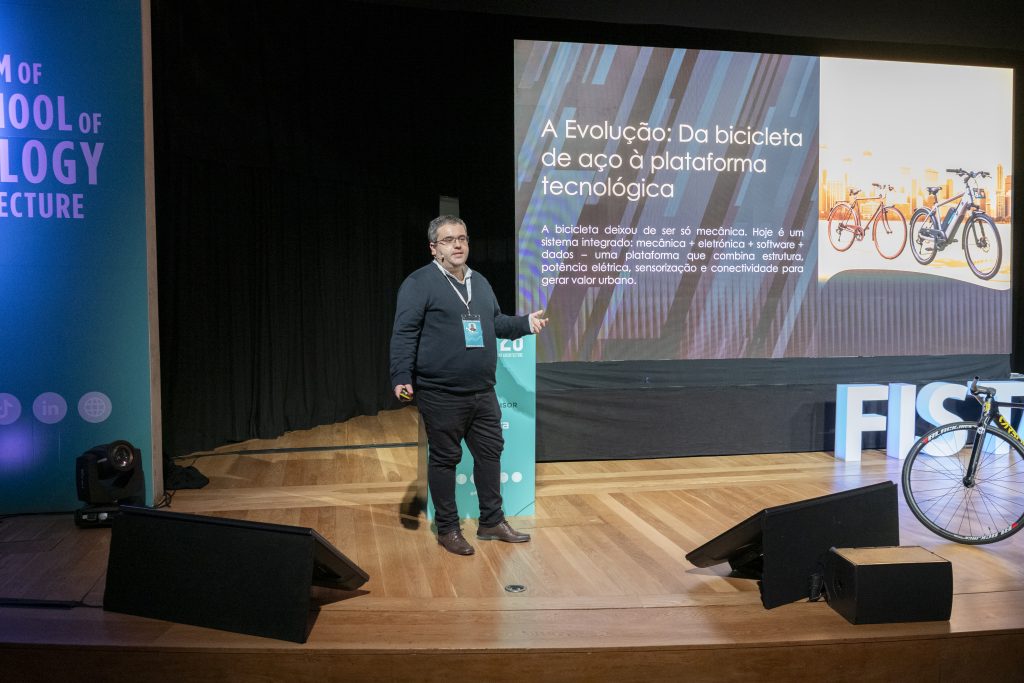
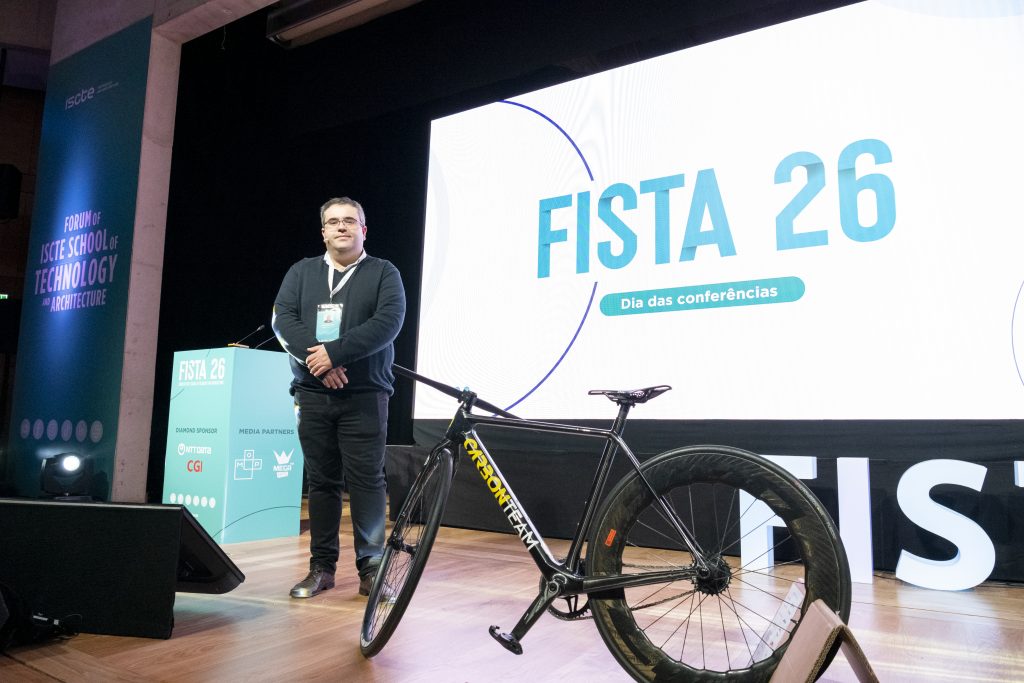
On March 3, César Coutinho, Chief Technology Officer of BIKiNNOV, participated in FISTA – ISCTE, where he delivered the session “How BIKiNNOV is Building the Future of Connected Micromobility” at the institution’s Grand Auditorium.
During the presentation, he explored the evolution of the traditional bicycle into an integrated technological platform, where mechanics, electronics, software, and data converge to create smarter, more sustainable mobility solutions tailored to the challenges of modern cities.
The talk highlighted some of the key challenges associated with developing the smart bicycle, particularly the use of advanced materials such as lightweight alloys and composites, which optimize the balance between weight, strength, and durability. It also addressed electrification, including the integration of electric motors and battery management systems, as well as the testing, validation, and certification processes required to ensure high standards of safety and reliability.
Another central topic was connectivity and digitalization, with emphasis on tools such as Digital Twin, structural simulation, 3D scanning, and advanced sensing systems that enable real-time data collection and analysis. These technologies help improve the performance of electric bicycles, enhance safety, and enable new approaches to predictive maintenance and user experience personalization.
The session also highlighted the importance of regulatory compliance in the micromobility sector, a key factor in building consumer trust and facilitating access to international markets.
During the presentation, César Coutinho also shared BIKiNNOV’s vision for the future of the two-wheel industry in Portugal, emphasizing the center’s role in promoting advanced engineering, laboratory testing, digitalization, advanced industrial production, and knowledge transfer. These areas are developed in close collaboration with universities, startups, and companies, helping to strengthen the sector’s innovation ecosystem and competitiveness.
In this context, the bicycle is increasingly seen as an interface between the user, the city, and urban services, integrating data, technology, and sustainability to support the development of more efficient, connected, and future-oriented mobility systems.
Participation in FISTA – ISCTE thus provided an opportunity to share knowledge, foster dialogue with the academic and technological community, and reinforce BIKiNNOV’s commitment to innovation and the advancement of micromobility.
This participation took place within the scope of project 004ANI – Future Smart Cities, integrated into the Interface Mission – Base Funding for Technology and Innovation Centers under the Recovery and Resilience Plan (PRR), funded by NextGenerationEU.
For more information, visit: https://recuperarportugal.gov.pt